 +
+

What is the global market environment for sway bars?
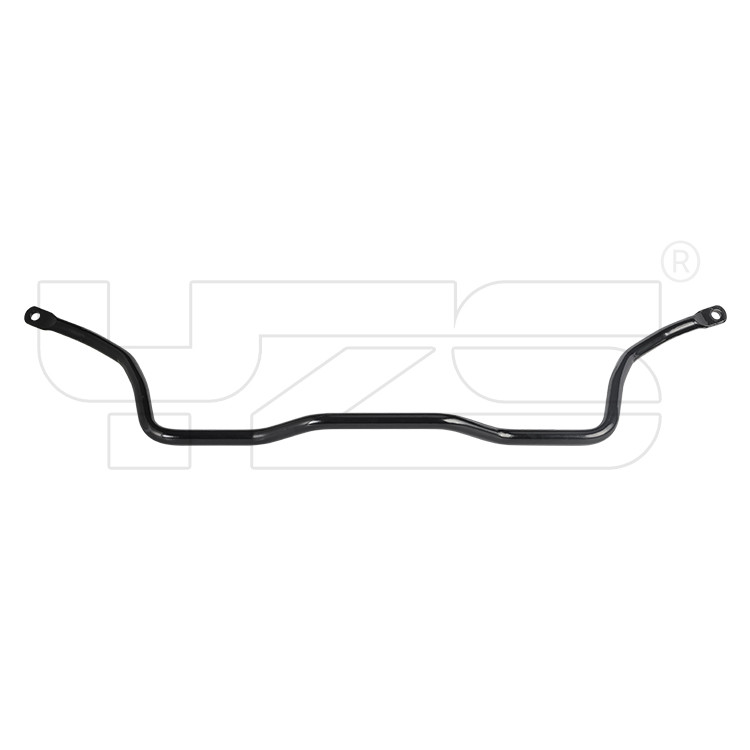
The global automotive sway bar market is a mature sector deeply intertwined with the automobile industry, with its development driven and constrained by multiple macro and micro factors.
1. Market Drivers
Recovery and Growth in Automobile Production and Sales: Despite challenges such as chip shortages, the global automotive market—particularly in emerging markets like China, India, and Southeast Asia—remains a primary engine of growth. Increased vehicle production directly drives demand for sway bars.
Rising Demand for Vehicle Handling and Safety: Consumers increasingly prioritize driving experience, and automakers emphasize superior handling and active safety as core selling points. Sway bars are a key and cost-effective component for enhancing these metrics.
Continued Popularity of SUVs and Crossovers (CUVs): These vehicles have a higher center of gravity and are more prone to body roll, requiring sway bars with higher performance and larger dimensions. Some models even feature thicker front/rear sway bars or electronically active sway bars, increasing per-vehicle value.
Rise of Electric Vehicles (EVs): EVs present new opportunities:
Battery packs add weight, necessitating stronger suspension systems to support and control the vehicle body.
While a low center of gravity (due to underfloor batteries) is beneficial, the heavier body still requires sway bars to suppress roll during aggressive cornering.
Integrated Design: To save space and weight, sway bars may be integrated with subframes or other chassis components, demanding higher technical expertise.
Penetration of Active Sway Bars (Electronic Anti-Roll Bars): This represents a high-end growth segment. Electronically controlled active sway bars can adjust torsional stiffness in milliseconds, balancing comfort and handling. They are primarily used in high-end luxury cars, performance vehicles, and premium SUVs, with applications gradually expanding as technology costs decline.
2. Market Challenges and Constraints
Raw Material Price Volatility: Sway bars are primarily made of spring steel. Fluctuations in steel prices directly impact manufacturing costs and profit margins.
Supply Chain Pressures: Global logistics challenges, geopolitical factors, and post-pandemic supply chain restructuring pose ongoing risks to just-in-time production in the automotive parts industry.
Intense Price Competition: The market is dominated by large multinational Tier-1 suppliers (e.g., ZF Friedrichshafen, ThyssenKrupp, Mubea, Sogefi Group) while facing competition from lower-cost manufacturers in regions like China, leading to significant pricing pressure.
Lightweighting Design Challenges: To improve fuel economy and EV range, vehicle lightweighting is a clear trend. This requires sway bars to become lighter without sacrificing performance, driving the adoption of hollow sway bars, new materials (e.g., composites), and optimized manufacturing processes, raising technical and capital barriers.
3. Regional Market Landscape
Asia-Pacific: The largest production and consumption market, led by China. The region's vast domestic vehicle production, rapidly growing EV market, and robust supply chain make it dynamic and highly competitive.
Europe and North America: Mature markets with stable demand. Growth is driven by sales of high-end models, performance cars, and luxury SUVs, along with higher adoption rates of active suspension systems (including active sway bars). Stringent vehicle safety regulations also support market demand.
Other Regions: Markets such as South America, the Middle East, and Africa are relatively small, with growth closely tied to local economic conditions and automotive industrialization.
4. Technology Trends
Integration with Active Suspension Systems: Sway bars are evolving from isolated mechanical components into integrated parts of vehicle dynamic control systems (e.g., Audi's AAS, Mercedes-Benz's Active Body Control).
Lightweighting and High-Performance Materials: Hollow sway bar technology is becoming increasingly common, while R&D continues on higher-strength, more fatigue-resistant steels.
Advances in Manufacturing Processes: Techniques such as hydroforming enable the production of more complex, stronger, and lighter sway bar links.
In summary, the global sway bar market environment is characterized by steady growth in traditional demand while being profoundly shaped by three major trends: electrification, intelligence (active control), and lightweighting. As an "essential component," it is transitioning from a passive mechanical part to an active, integrated smart chassis element. Market competition revolves around cost control, technological R&D, and global supply chain capabilities.
Contact Person
- Name:
- Jessica
- Tel:
+0086-576-87221128
+0086-13736677602
- WhatsApp:
- 8613736677602
- Address:
- Building 62, Chuangrong Industrial Zone, Yucheng Street, Yuhuan, Zhejiang 317600
subscription
Signup for our newsletter to stay up-to-date on our promotions, discounts, sales, special offers and more