 +
+

Classification of Control Arm Ball Joints
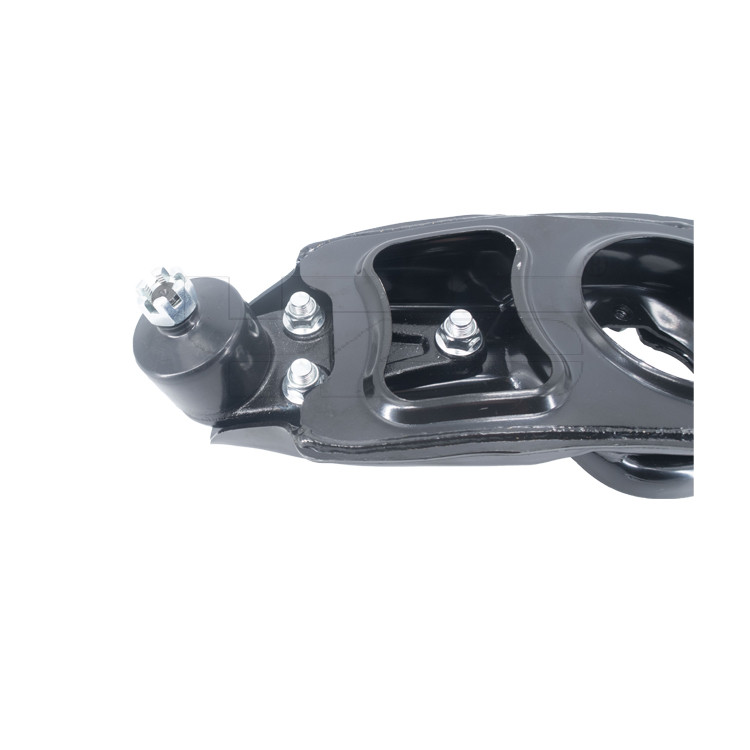
A ball joint is a crucial, spherical-bearing pivot that connects the control arm to the steering knuckle or spindle. It allows for multi-axis movement (up/down, side-to-side) while maintaining a solid connection. They are classified primarily by their design, function, and load-bearing role.
1. By Design and Construction 设计与构造分类
Press-in / Push-in Ball Joints
解释: The housing is pressed into a tapered or cylindrical hole in the control arm. Common in many older vehicles and some modern designs where the control arm is a single piece of stamped steel.
特点: Replacement often requires a special press tool. Sometimes the entire control arm is replaced if the joint is integrated.
Bolted-in / Bolt-On Ball Joints
解释: The ball joint has a flange with two or more bolts that secure it to the control arm. This design is very common in modern vehicles, especially with aluminum or composite control arms.
特点: Much easier to service and replace without specialized pressing tools.
Integrated / Built-in Ball Joints
解释: The ball joint is permanently riveted or welded to the control arm during manufacturing. The ball stud itself can be replaced, but the housing is part of the arm.
特点: Typically found on original equipment (OE) parts. When it fails, the entire control arm assembly is usually replaced, which often includes new bushings as well.
2. By Load-Bearing Function 按承载功能分类
This is the most critical technical classification, determined by the vehicle's suspension design.
Load-Carrying / Weight-Bearing Ball Joints
解释: This joint supports the vehicle's weight. It is under constant compressive load. In a typical double-wishbone or MacPherson strut suspension, the lower ball joint is almost always the load-carrying one.
识别: It is located on the control arm that primarily supports the spring weight (often the lower control arm).
Follower / Non-Load-Carrying / Positional Ball Joints
解释: This joint does not support the vehicle's weight. Its primary function is to maintain the wheel's horizontal position and allow it to pivot for steering. The upper ball joint in a double-wishbone setup is often a follower joint.
识别: It is located on the control arm that primarily locates the wheel (often the upper control arm in a double A-arm system).
3. By Sealing and Lubrication 按密封与润滑分类
Greaseable / Serviceable Ball Joints
解释: Features a zerk fitting (grease nipple). Allows periodic injection of fresh grease to flush out contaminants and extend service life. Common in trucks, SUVs, and older vehicles.
特点: Requires maintenance but can last longer if serviced properly.
Sealed / Non-Serviceable / Lifetime Ball Joints
解释: Pre-lubricated at the factory and sealed with a boot. No maintenance is possible or required. Designed to last the "life" of the vehicle (though this varies).
特点: Dominant in modern passenger cars for reduced maintenance. When the boot tears and grease leaks out, the joint fails quickly and must be replaced.
4. By Application and Position 按应用与位置分类
Upper Ball Joints
Lower Ball Joints
解释: Defined by their physical location on the suspension. A vehicle can have one or both. The classification as load-carrying or follower is more important than just "upper" or "lower," but position is key for identification and ordering the correct part.
5. Specialized and Performance Types 专用与性能类型
Heavy-Duty Ball Joints
解释: Built with thicker housings, larger studs, and tougher materials for trucks, off-road vehicles, or towing applications.
Performance / Adjustable Ball Joints
解释: Allow for fine-tuning of camber angle by using shims or an eccentric design. Common in racing, sports cars, and performance alignment setups.
Contact Person
- Full Name:
- Jessica
- Tel:
+86 576-87221128
+86 13736677602
- WhatsApp:
- 8613736677602
- Address:
- Building 62, Chuangrong Industrial Zone, Yucheng Street, Yuhuan, Zhejiang 317600
subscription
Signup for our newsletter to stay up-to-date on our promotions, discounts, sales, special offers and more