 +
+

Why Are There Different Types of Torsion Bars?
Why Are There Different Types of Torsion Bars?
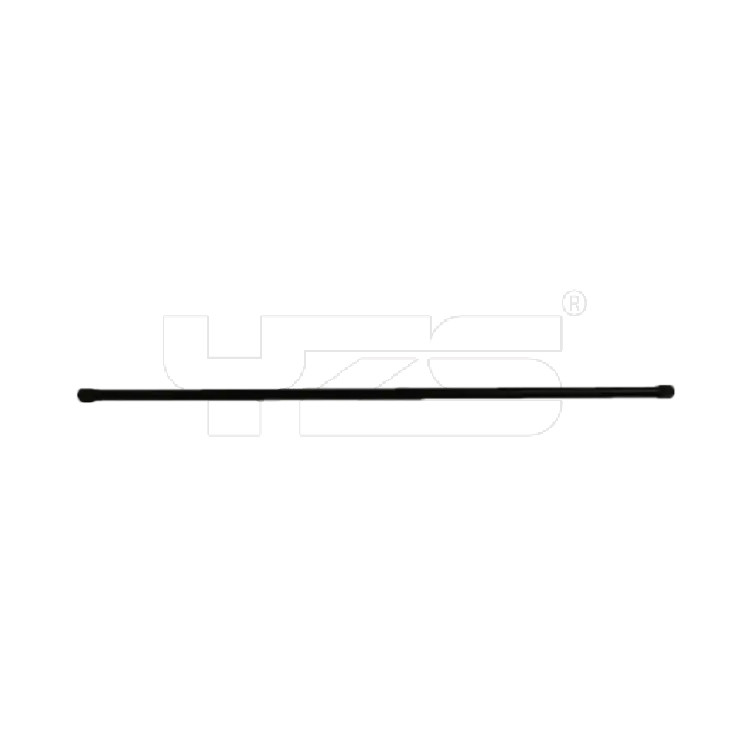
Torsion bars are long metal bars that work as springs by twisting to absorb shocks and support the vehicle’s weight.
There are different types mainly for vehicle size, weight, suspension design, performance, and space.
Here are the key reasons:
1. Different vehicle weight & load capacity
Light cars need thinner, softer torsion bars for a comfortable ride.
Trucks, SUVs, and heavy vehicles need thicker, stiffer torsion bars to support heavy loads and prevent sagging.
2. Front vs. rear suspension
Many vehicles use torsion bars only at the front, while some use them front and rear.
Front and rear bars have different length, diameter, and stiffness.
3. Suspension design & available space
Some chassis have limited space, so torsion bars come in different lengths and shapes to fit.
They can be mounted longitudinally (front to back) or transversely (side to side), requiring different designs.
4. Stiffness for ride & handling
Softer torsion bars: improve ride comfort for daily driving.
Stiffer torsion bars: reduce body roll, improve stability, and are used in performance or off-road vehicles.
5. Adjustability
Some torsion bars are adjustable to raise or lower the vehicle height.
Others are non-adjustable, simpler and cheaper for standard passenger cars.
6. Material & durability
Different materials and heat treatments create torsion bars for normal use, heavy-duty, or off-road abuse.
Contact Person
- Full Name:
- Jessica
- Tel:
+86 576-87221128
+86 13736677602
- WhatsApp:
- 8613736677602
- Address:
- Building 62, Chuangrong Industrial Zone, Yucheng Street, Yuhuan, Zhejiang 317600
subscription
Signup for our newsletter to stay up-to-date on our promotions, discounts, sales, special offers and more