 +
+

Why was the sway bar invented?
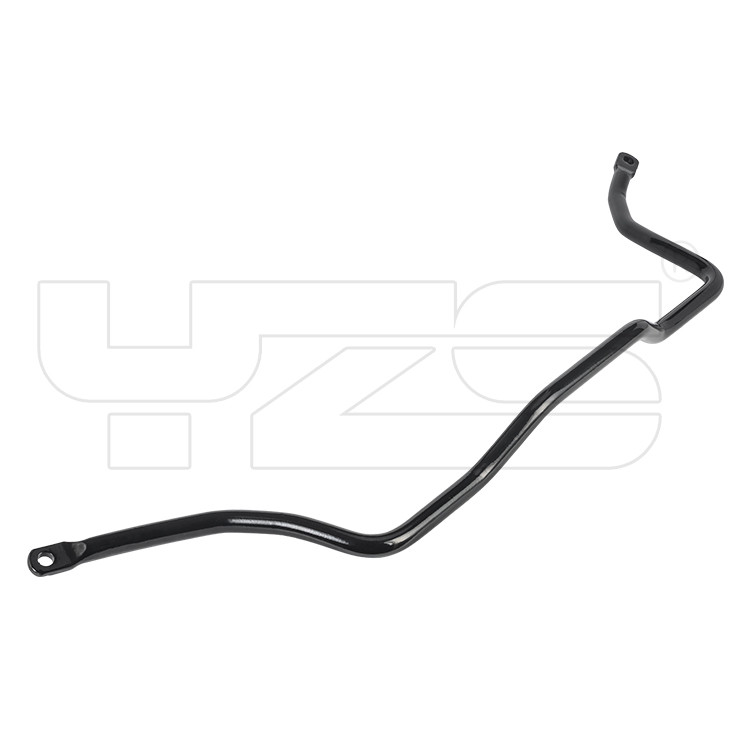
The sway bar (anti-roll bar) was invented primarily to address vehicle body roll during turns, thereby enhancing handling stability and safety.
Below is a detailed explanation:
1. Core Issue: Body Roll
When a car turns, centrifugal force pushes the vehicle outward, causing the body to tilt toward the inside of the turn (i.e., body roll). Excessive roll leads to several issues:
Reduced Handling: Uneven tire grip distribution results in sluggish or imprecise steering response.
Decreased Comfort: Passengers experience noticeable lateral sway.
Safety Risks: During emergency lane changes or high-speed cornering, severe roll may cause vehicle instability or even rollover.
2. Limitations of Traditional Suspensions
Early vehicle suspensions (such as leaf springs or simple coil springs) allowed relatively independent movement of the left and right wheels. While this helped absorb road bumps, during turns, more vehicle weight transferred to the outer wheels, compressing the outer suspension and extending the inner suspension, thereby exacerbating body roll.
3. The Solution: The Sway Bar
The sway bar is a simple U-shaped metal rod (typically made of spring steel). Its ends are connected via links to the left and right suspension components (such as control arms or shock absorbers), while its center is mounted to the chassis or subframe via bushings.
How It Works:
When both wheels move synchronously (e.g., driving over bumps), the sway bar twists along with the suspension, minimally affecting comfort.
When the wheels move asynchronously (e.g., during a turn, where one side compresses and the other extends), the sway bar is forcefully twisted. Due to its torsional stiffness, it resists this asymmetrical motion, transferring some force from the compressed outer suspension to the extended inner suspension.
Effects:
Reduces Roll: Effectively increases the suspension's "stiffness" against body roll, limiting the vehicle's lateral roll angle.
Improves Handling: Helps maintain optimal tire contact with the road, enhancing steering response and cornering limits.
Preserves Some Independence: Unlike a fully rigid connection between the wheels, it still allows moderate independent wheel movement over uneven surfaces.
4. Background and Significance of the Invention
Origins: The concept of the sway bar appeared in early 20th-century carriages and automobiles, but its widespread adoption and optimization in mass-produced vehicles evolved alongside increasing vehicle speeds and demands for better handling performance.
Key Drivers:
Performance Needs: In racing and sports cars, the sway bar became a critical tuning component for maximizing cornering speed.
Safety Demands: In consumer vehicles, it provides more stable and safer handling for everyday drivers, especially during emergency maneuvers.
Design Flexibility: Engineers can independently tune the vehicle's roll stiffness and ride comfort.
In summary, the invention of the sway bar is a clever and effective solution in automotive engineering. By creating an "interconnection" between the left and right suspension systems, it specifically counteracts body roll induced by centrifugal force during turns. This significantly improves handling stability and safety without excessively compromising ride comfort.
Contact Person
- Full Name:
- Jessica
- Tel:
+86 576-87221128
+86 13736677602
- WhatsApp:
- 8613736677602
- Address:
- Building 62, Chuangrong Industrial Zone, Yucheng Street, Yuhuan, Zhejiang 317600
subscription
Signup for our newsletter to stay up-to-date on our promotions, discounts, sales, special offers and more